

Forgetting a name, leaving an item behind, missing a small task, or walking into a room and losing the reason can be frustrating. When it happens repeatedly, it can also become frightening.
There is no responsible way to diagnose the cause from a list of examples online. Memory can be affected by attention, sleep, stress, mood, medication, substance use, nutritional issues, medical conditions, head injury, and many other factors.
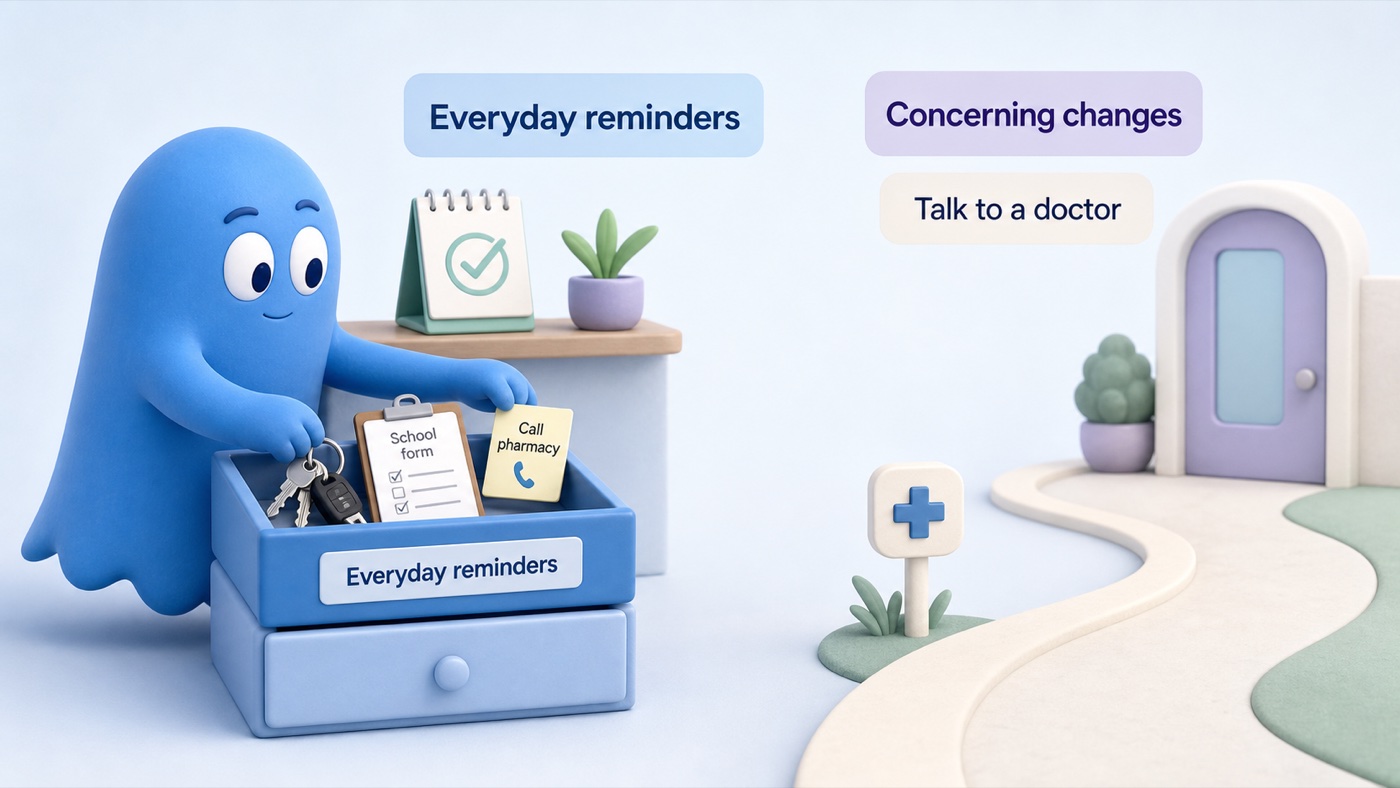
First identify what kind of forgetting is happening
Some failures involve information from the past: where an object was placed or what someone said. Others involve prospective memory: remembering to do something in the future.
Systems are particularly useful for future intentions. They can hold the task and bring it back at the relevant time or place.
Use one capture and reminder routine
When a commitment appears:
- Capture it immediately
- Add the context needed to act
- Add a time or situational cue when relevant
- Review the captured result
- Use backups for high-consequence items
With MyOffload, you can say: “Bring the signed form when I leave for school tomorrow” or “Call the pharmacy after lunch.” The app preserves the thought, creates a task, and creates the requested reminder for you to review.
If several everyday tasks collect in one place, Plan My Day can prioritize and order today in one tap. That can make the next task easier to see without asking you to keep checking every item.
Research on cognitive offloading and implementation intentions suggests external reminders and cue-action plans can support prospective memory. That is evidence for managing intentions, not treating memory disorders.
Create stable homes for repeated objects
Some everyday forgetting is reduced by making the environment do more work:
- keys always live in one bowl
- medication stays with an established routine, following professional instructions
- items that must leave the house are placed by the exit
- forms are captured and stored in one known location
Consistency reduces the need to reconstruct a decision every day.
Do not use an app to explain symptoms
MyOffload can capture intentions, create requested reminders, and organize today. It cannot measure cognition, rule out illness, or tell whether a pattern is normal.
It is also possible to become more confident because a reminder system works while the underlying concern remains. If you are worried, bring concrete examples and a timeline to a healthcare professional.
When to speak with a healthcare professional
Seek medical advice when memory changes are sudden, worsening, unusual for you, or interfering with daily life. Examples include:
- getting lost in familiar places
- repeated questions or marked confusion
- difficulty managing medication, money, cooking, driving, or personal care
- major changes in language, judgement, behaviour, or personality
- symptoms following a head injury
- safety risks to yourself or others
The National Institute on Aging advises discussing noticeable memory changes with a doctor. Potential contributors can include medication effects, sleep problems, depression or anxiety, nutritional deficiencies, infection, and other medical conditions. Finding the cause matters because some causes are treatable.
For sudden confusion or neurological symptoms, seek urgent medical care.
Keep a brief record for the appointment
For one or two weeks, note:
- what happened
- when it happened
- sleep and major stressors
- recent medication or health changes
- whether someone else noticed
- whether daily functioning or safety was affected
Do not delay care to collect perfect data. The record is simply context for a professional.
The bottom line
Use external systems for the jobs they can do: capture intentions, add cues, and reduce the burden of remembering everyday tasks. Use healthcare for the job it can do: evaluate concerning changes and possible causes.
A good system supports you. It does not dismiss your concern.
Research and guidance behind this article
- Burnett, L. K., & Richmond, L. L. (2026). Meta-analytic investigations of the effect of cognitive offloading on memory-based task performance and interindividual variability. Memory & Cognition.
- Chen, X.-J., et al. (2015). The effect of implementation intention on prospective memory: a systematic and meta-analytic review. Psychiatry Research.
- National Institute on Aging. Memory Problems, Forgetfulness, and Aging.
- Brigola, A. G., et al. (2015). Subjective memory complaints associated with depression and cognitive impairment in the elderly: a systematic review. Dementia & Neuropsychologia.
Try MyOffload
Give the thought somewhere useful to go
Say the messy version. MyOffload keeps the context and turns the actionable parts into tasks, notes, and requested reminders for you to review.
Download MyOffload for iPhone